
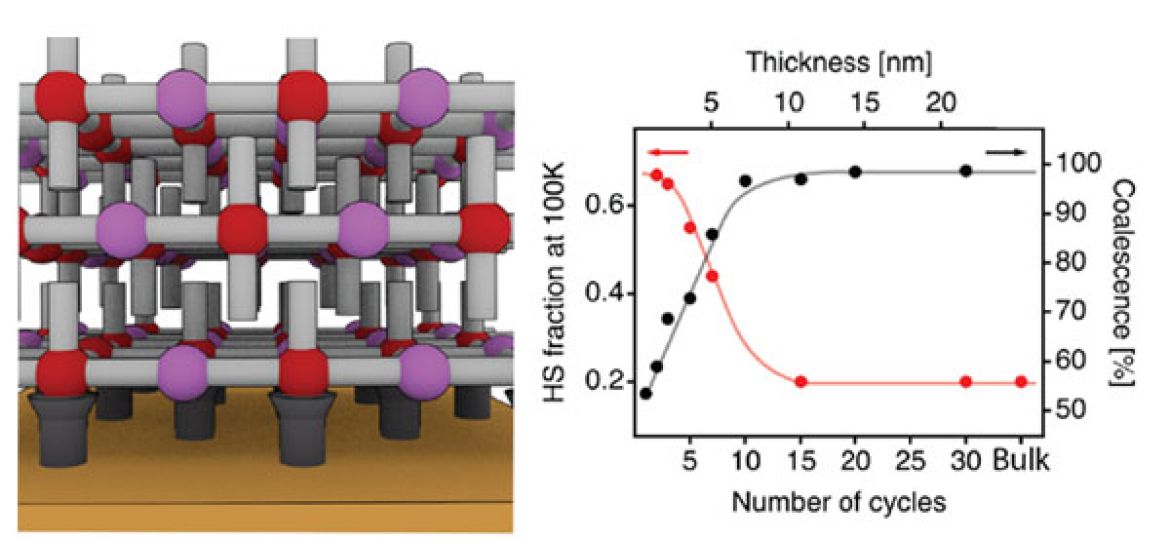
Víctors study on the nanostructuration of spin crossover coordination polymers has just been published in Chemical Science. A collaborative endeavor with contributions from FuniMat, RTMM and SMolMat groups of the ICMol, together with Unité Mixte de Physique CNRS/Thales and DEIMOS beamline of the Soleil synchrotron. Below a critical thickness, the completeness of the spin transition is sharply affected due to an equally dramatic film microstructure transition from fully coalesced layer into segregated nanocrystalline particles. This careful examination of the spin crossover properties of films at the nanoscale provides relevant information for scientists working towards the integration of this switchable materials into nanometric electronic and spintronic devices. For more details take a look at the full text here
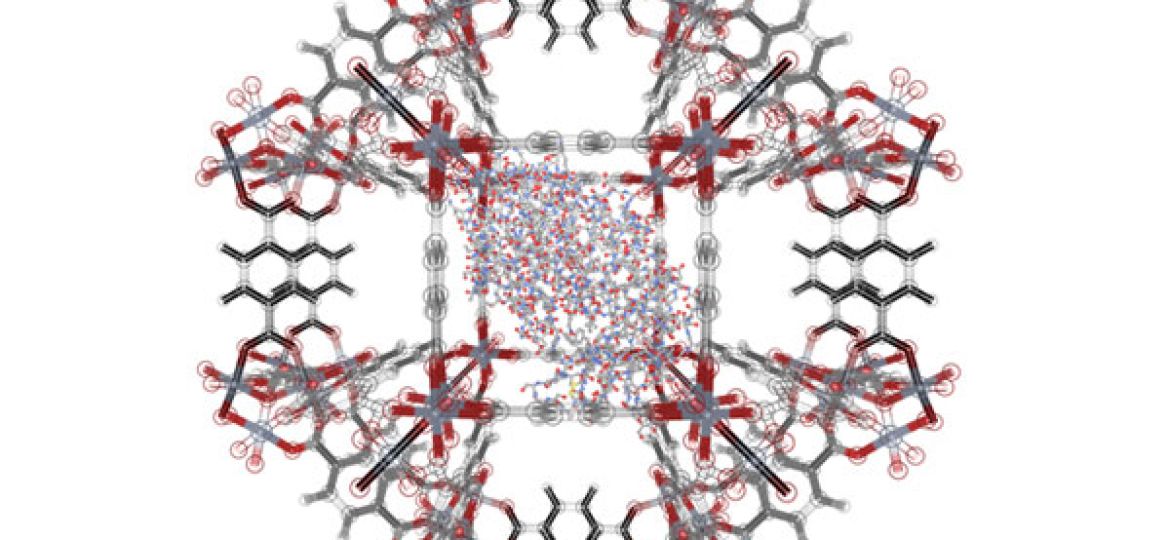
On a recently published joint work, Jose, Neyvis and Belén used a novel method to induce the translocation of an enzyme into the pores of a MOF. Their procedure is based in a partial denaturation of the enzyme followed by its refolding into the polar cavities offered by the host. Thanks to a combination of experimental and theoretical work, we managed to demonstrate that the enzyme adopts a different conformation inside the MOF, granting it enhanced activity, stability and recyclability. The work is now available in Chemical Science
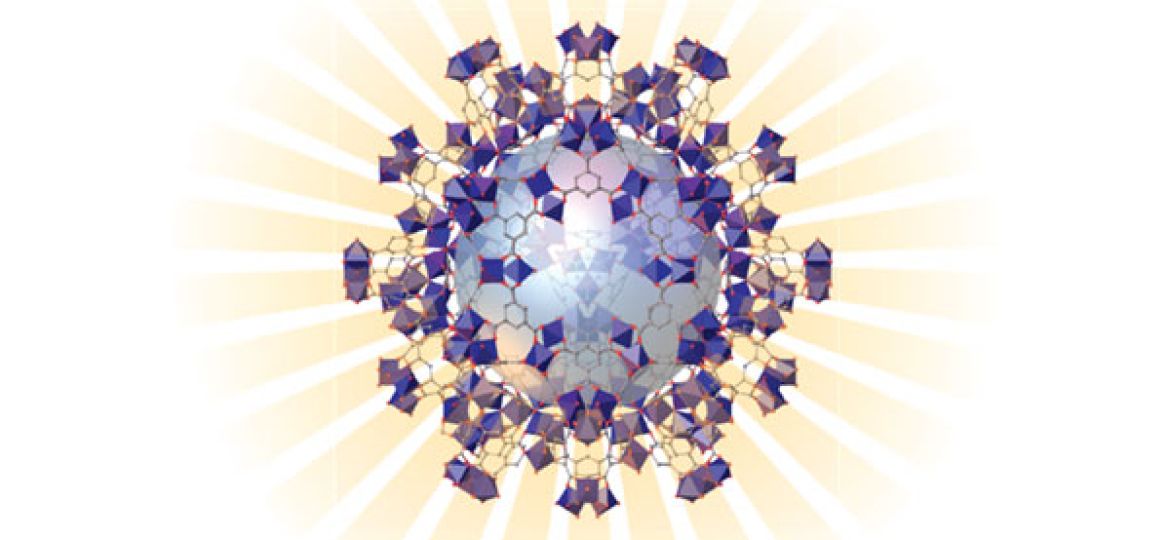
Javi reports the synthesis of the first mesoporous titanium-organic framework, now available in Chemical Science. The use of High-Throughput (HT) methodologies enabled the synthesis of highly crystalline MIL-100(Ti). Compared to the classical Fe phase, this MOF shows improved chemical stability and retains the photoactivity intrinsic to Ti(IV) centers. Photocatalytic H2 production was demonstrated in collaboration with Hermenegildo Garcías group at the Instituto of Tecnología Química. For more details check the link
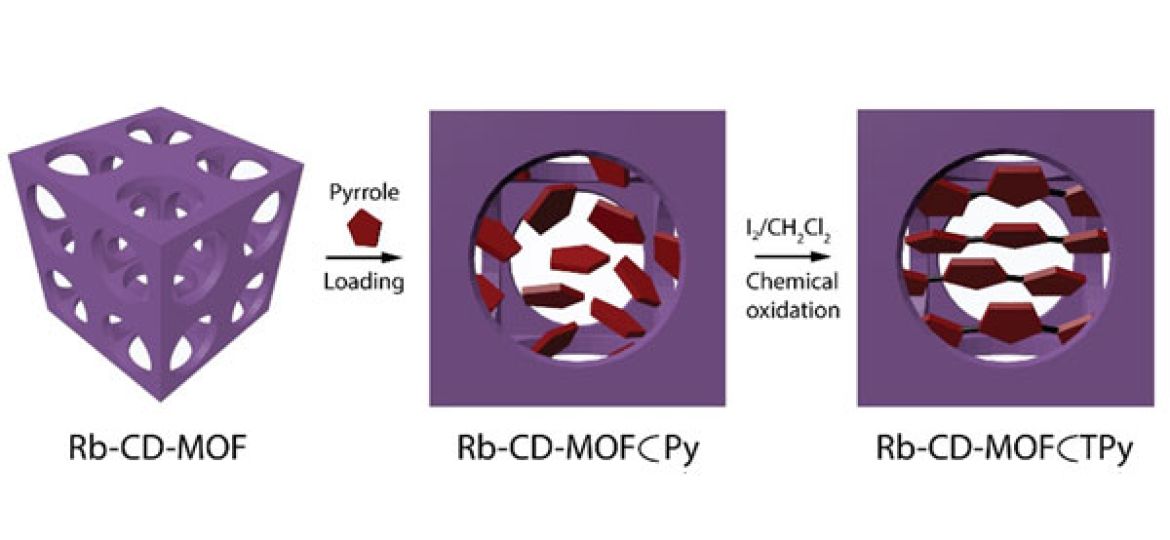
Alejandros work has just been published in Angewandte Chemie Int. Ed. In this paper, Single-Crystal X-Ray Diffraction is used to follow the restricted polymerization of pyrrole inside a cyclodextrin MOF, which generates discrete units of highly reactive cationic terpyrrole inside the pores. This work gives unprecedented information about the host-guest interactions that limit the formation of polymers, that can be useful to future works using MOFs as templates for polymerization processes. For more info see here

Elisa comes from Lille (France).For her internship as an Erasmus student, she will be helping Belén with the synthesis of chiral MOFs from proteogenic building blocks.
Carmen graduated in Chemistry in 2017 at the University of Santiago de Compostela an got a master in Chemistry at the University of Valencia in 2019. She will be working in the design of porous and materials and layered clays for water remediation and removal of toxics.
Elena is originally from Salamanca. She joins the force with a Juan de la Cierva Formación Fellowship after a Postdoc stay in Versailles. She will approach new strategies for cooperative catalysis in porous materials.
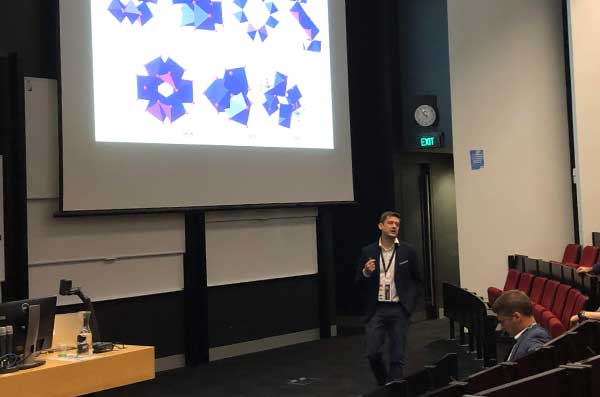
Funimat was very well represented at the Novel Porous Materials Symposium held in Australia and the 6th International Conference on Metal-Organic Frameworks and Open Framework Compounds held in New Zealand. Carlos and Natalia presented our last results in Titanium Organic-Frameworks. For more details see here
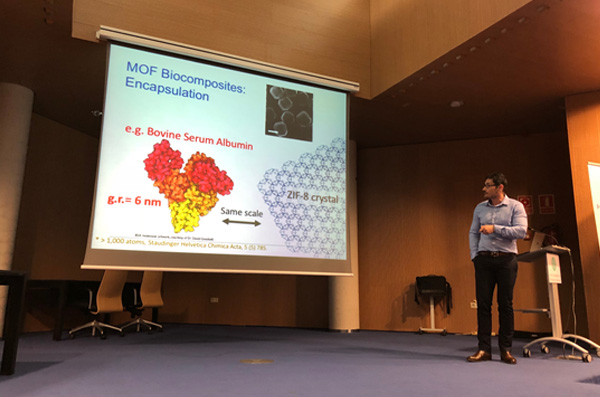
Prof. Christian Doonan from University of Adelaide visited us to lecture on the recent advances of his team on the potential of MOF biocomposites for application to industrial, heterogeneous and biocatalysis. We are hopeful this will initiate a fruitful collaboration between both groups.

Isabel was born in Guadalajara and earned his Ph.D. in 2018, working in the group of Ross Forgan at the University of Glasgow. She will be exploring new methodologies for controlling the role of defects over structure and reactivity in MOFs.